Home staging ROI explained for Ontario sellers
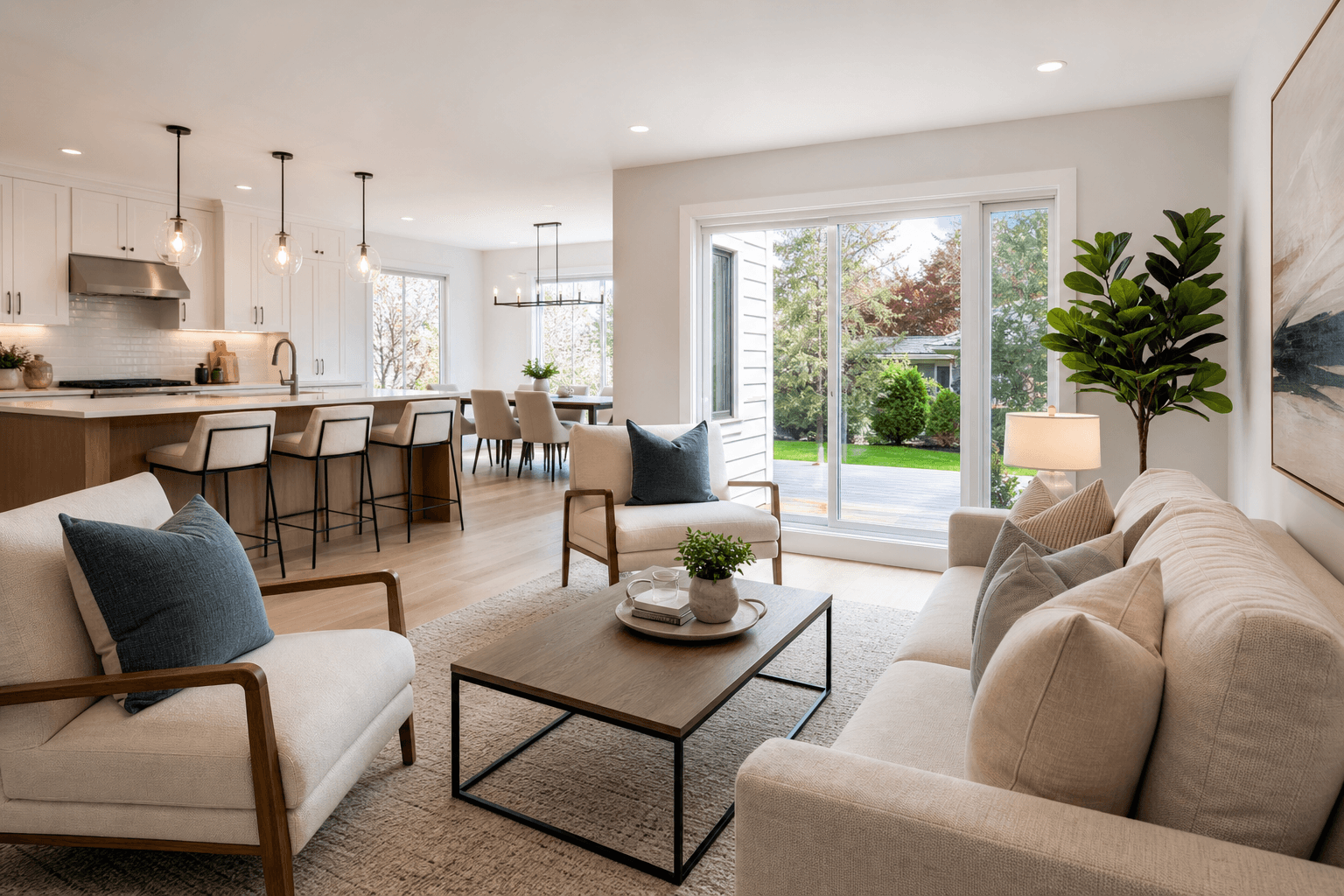
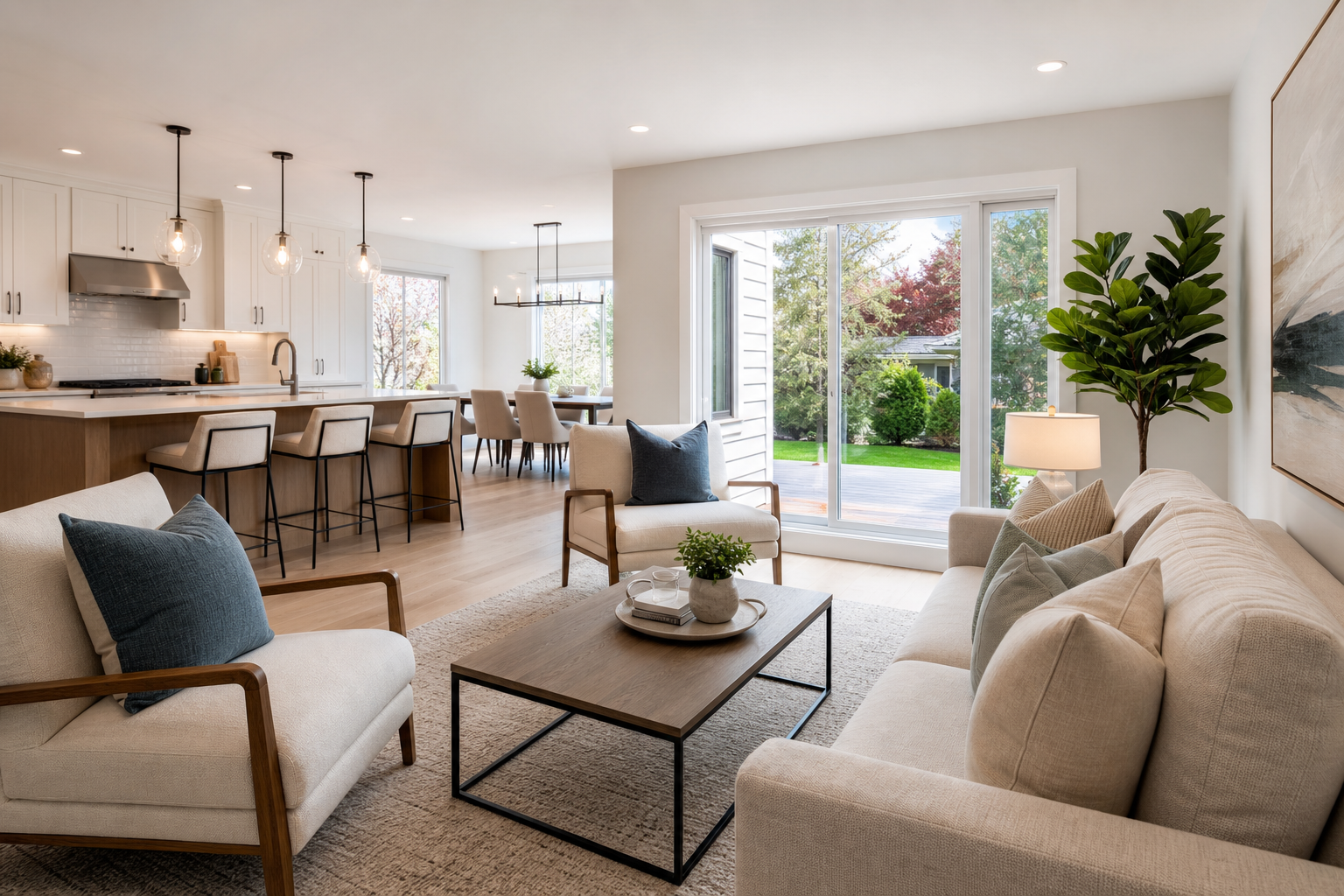
Home staging ROI explained for Ontario sellers
Home staging ROI measures the financial return a seller gains from investing in staging before listing. It focuses on two practical outcomes: the incremental sale price attributable to staging and the value of selling faster. For Ontario sellers, a short evidence-based calculation can show whether staging is likely to pay for itself.
What home staging ROI measures and why it matters
What staging ROI measures
Staging return on investment is the ratio of extra dollars received at sale to the dollars spent on staging. Sellers commonly use either the gross sale-price uplift or the net improvement after fees. A simple formula is: (Sale price with staging − Sale price without staging) ÷ Staging cost.
Who should calculate it before listing
Every seller who must decide whether to spend on staging should calculate expected ROI. The calculation is most useful for owners of detached homes and higher-priced condos where modest percentage uplifts translate into larger dollar gains, for listings competing against well-presented inventory, and for vacant homes where staging is often the clearest way to show scale and flow.
Typical staging cost bands in Ontario and the GTA
Staging costs vary by service type, property size, and rental duration. The ranges below are drawn from industry cost summaries and local practitioner examples and are a good starting point for Toronto, Mississauga, Brampton, Oakville, and nearby markets.
Occupied staging cost range
For homes that remain lived-in while listed, professional staging commonly runs between about $1,500 and $5,000. Costs reflect stylist visits, accessory purchases, decluttering, and light reconfiguration. See an industry overview at BlueprintKit for context.
Vacant staging cost range
Vacant-home staging is more expensive because furniture sets are rented for the listing period. Typical ranges start around $2,000 and can exceed $10,000 for larger or high-end properties. Local case work shows higher single-project investments are sometimes made to achieve notable price uplift; Kaizen Real Estate provides a Markham example that illustrates this dynamic.
Virtual and partial staging cost range
Partial staging or targeted room refreshes fall between occupied and vacant budgets and are useful when only key rooms need attention. Virtual staging is the least expensive option, often quoted at roughly $100 to $400 per room. When paired with professional photography, virtual or partial staging can deliver many of the same buyer-visualization benefits at lower cost; see HomeCostLab for comparative figures.
What the evidence shows about sale-price uplift and days on market

Sale-price uplift ranges
Published summaries and practitioner reports show staged listings commonly sell for a measurable premium versus unstaged equivalents. Typical uplifts reported across sources range from low single digits up to the mid-teens percentage. Local examples have shown single-project improvements that imply return ratios of roughly 3:1 to 5:1 in specific cases. For synthesis of data and market examples, see Homai and Kaizen Real Estate.
Days-on-market improvements
Staged properties also tend to sell faster. Industry reports and agent surveys have observed substantial reductions in days on market, with some studies reporting staged listings spend markedly less time available than unstaged equivalents. Selling faster reduces carrying costs and the exposure that can force later price reductions, so time saved should be included when estimating staging value.
How ROI differs by staging type: occupied, vacant, partial and virtual
Each staging approach produces different costs and likely returns. Choose the level that matches the listing challenge and budget.
- Occupied staging: Lower cost and fast to implement. Best when the home is in good condition and needs styling and decluttering. It often delivers strong ROI because the up-front cost is modest relative to potential uplift.
- Vacant staging: Higher rental fees for furniture and installation. Most effective when empty rooms prevent buyers from understanding scale and flow. Vacant staging can produce the largest absolute price gains for larger homes, but the higher cost requires careful ROI checking.
- Partial staging: Focuses on living room, main bedroom, and other key angles. A cost-efficient compromise when budget is limited and a few rooms will change buyer perception.
- Virtual staging: Lowest cost per room and useful where photos and floorplans already show finishes well. Its effectiveness depends on high-quality photography and honest labelling of staged images.
How to calculate staging ROI and a local worked example
ROI formula step by step
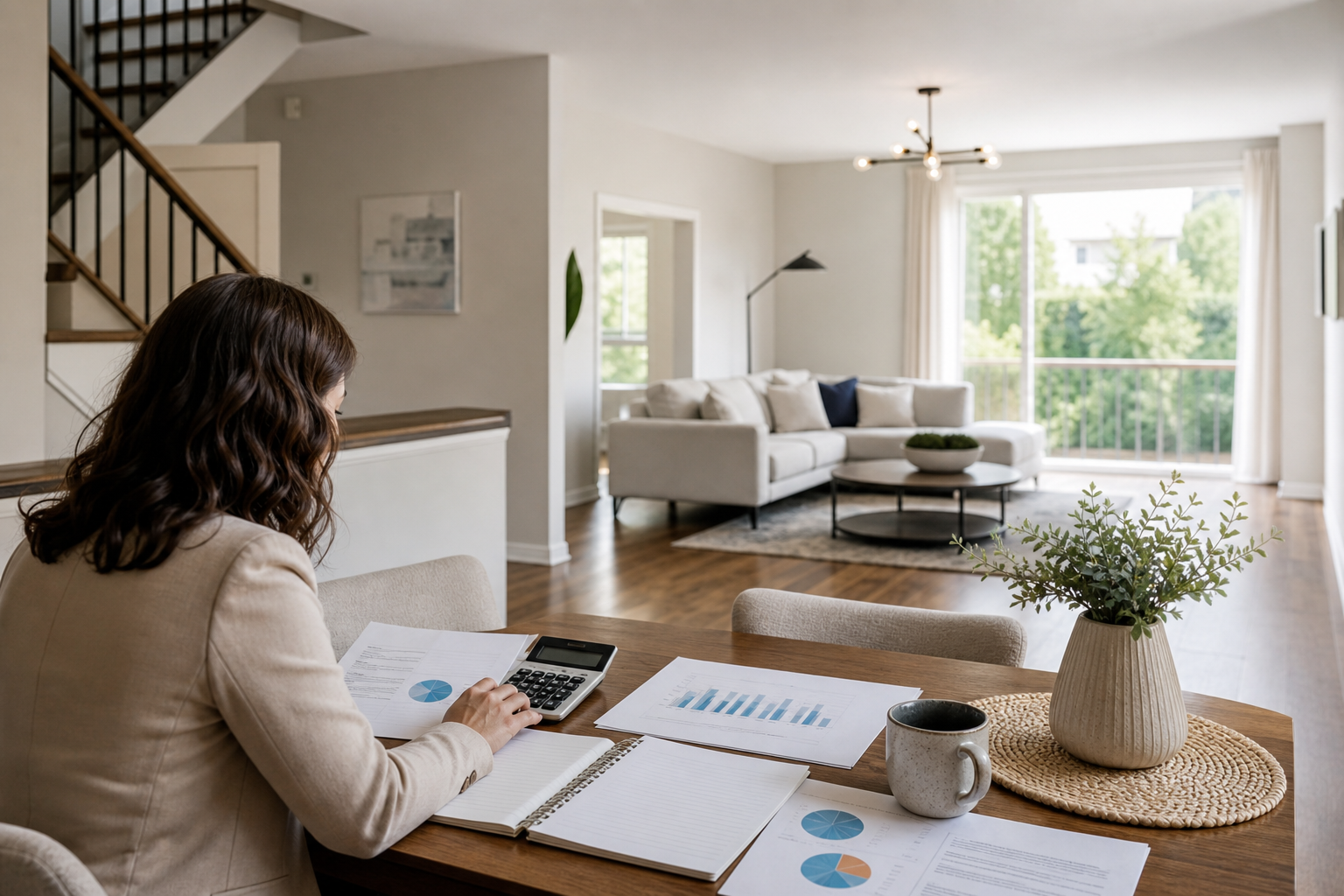
Use this straightforward formula. For a conservative view include transaction costs and realtor fees when estimating net gain.
Staging ROI = (Estimated sale-price uplift in dollars − Staging cost) ÷ Staging cost
Key inputs: staging cost, a conservative estimate of sale-price uplift in dollars, and any fees that reduce the uplift you actually capture. A simple decision rule many agents use is: will the likely uplift be at least 2 to 3 times the staging spend?
Worked example using a Markham/GTA illustrative case
Use market-backed ranges rather than a single guarantee. A Markham example reported a moderate staging investment of $5,000 to $12,000 produced sale-price improvements of $20,000 to $50,000, implying a return ratio between about 3:1 and 5:1 in that case. This shows how modest staging can multiply value in some local sales.
Conservative example calculation: assume you pay $6,000 for staging and estimate a conservative uplift of $20,000. Net uplift is $20,000 − $6,000 = $14,000. Staging ROI = $14,000 ÷ $6,000 = 2.33, or a 233 percent return, meaning each staging dollar produced about $2.33 of net gain in sale proceeds in this illustrative case. When doing your own estimate, pick the lower bound of reported uplift and the upper bound of staging cost to test whether staging still justifies the spend.
A five-point decision checklist for Ontario sellers
Use these five quick rules to decide whether to stage and at what level.
- Comparable sale gap: If competing comps present better staging and sell for noticeably higher prices, staging to close the presentation gap is likely worthwhile.
- Days-on-market sensitivity: If you need a fast sale to avoid carrying costs or market risk, staging often reduces listing time and can justify the expense.
- Buyer profile: Family and move-up buyers respond strongly to furnished flow, so full or partial staging tends to have higher impact. Investor buyers may need only targeted or virtual staging.
- Property condition: Empty rooms, awkward layouts, or dated finishes that distract buyers are good candidates for staging because presentation often increases perceived value more than minor cosmetic repairs alone.
- Staging budget versus likely uplift: Apply the ROI formula. If conservative uplift estimates still exceed staging cost by a comfortable margin, proceed; otherwise choose partial or virtual staging, or invest in targeted repairs and professional photography instead.
If you want staged photography, vendor coordination, or a staging partner recommendation, Malika Homes offers seller services and a vetted partner network to implement staging and concierge support; see our article on why staging matters for home sales and contact us to book a consultation.
Common seller objections and practical alternatives
Below are common concerns and lower-cost alternatives that preserve many staging benefits.
- I cannot afford staging: Consider partial staging for key rooms or virtual staging for vacant rooms. Virtual staging is far cheaper and can create strong listing visuals when paired with professional photography.
- My house is already presentable: Invest in professional decluttering, minor repairs, and high-quality photography. Occupied staging can be light-touch and still improve buyer perception.
- I will use price reductions instead: Price reductions reduce your proceeds permanently. Staging can protect price and cut time on market, so compare the expected long-term lost proceeds from discounting to the up-front cost of staging before choosing the lower-cost path.
Frequently asked questions
How much does it typically cost to stage a Toronto condo versus a detached home in Mississauga
Condo staging tends toward lower cost because smaller square footage requires fewer rental pieces; typical occupied or partial staging ranges are about $1,500 to $5,000 for condos. Detached homes, especially vacant ones, often fall into the $2,000 to $10,000 band depending on size and finish level. See industry cost summaries for typical ranges.
Can virtual staging deliver a positive ROI for a vacant listing
Yes. Virtual staging is inexpensive relative to physical staging and can improve buyer visualization when photos and floorplans are strong. It often produces a positive ROI for smaller properties or listings where finishes are the main selling point. Ensure virtual images are realistic and clearly labelled as staged.
How quickly can staging reduce days on market in the GTA
Industry summaries report staged homes can sell significantly faster than unstaged equivalents. The exact time saved depends on market conditions and price positioning, but staging consistently reduces listing time in published findings and agent surveys.
What minimum staging budget tends to move the needle in Ontario markets
Many practitioners find modest investments of $1,500 to $3,000 for occupied or partial staging can change buyer perception enough to improve results for condos and smaller homes. Larger detached homes typically require higher budgets. Use conservative local uplift estimates to test whether a planned spend will pay off.
How do I find a staging service that will work with my listing timeline
Look for staging firms that publish delivery windows, rental duration options, and flexible installation dates. Malika Homes maintains a vetted partner network and concierge coordination to align staging timelines with inspection, photography, and listing dates; visit our seller services page to learn more.
If you want a personalised staging ROI estimate for your property, or a staging partner and coordinated listing plan, schedule a consultation with Malika Homes to access our seller services and vetted trade partners.
Key sources referenced in this article include industry cost and outcome summaries and a local Markham review that illustrate real staging returns. For further reading, see these resources: BlueprintKit on staging cost, HomeCostLab staging cost guide, Homai on staging outcomes, Nestiny on staging value, and Kaizen Real Estate Markham staging example.
Related reading: learn more about why staging matters for selling with a data-driven approach on our blog: why staging matters for home sales.
For a tailored staging ROI estimate and a seller strategy that fits your timeline and budget, contact Malika Homes to schedule a consultation.
Tags
Have questions about Ontario real estate?
Book an appointment with Malika Mehrotra to discuss your buying or selling goals.
Book Appointment