Commercial Space in Ontario: Pick Winners in 2026

Commercial real estate in Ontario refers to income-producing property such as industrial, retail, office, and mixed-use assets across cities like Toronto and Mississauga. Strong employment hubs and population growth support demand. From our Mississauga base at 6750 Davand Dr, we guide buyers and investors to evaluate locations, leases, and risk so you can act with confidence.
By Malika Mehrotra — Founder & Realtor, Malika Homes
Last updated: June 8, 2026
At a Glance
Use this guide to understand Ontario’s commercial property landscape, from asset types and due diligence to financing and leasing. We built it for investors and owner-operators who want a clear, practical path to choosing strong locations, negotiating smart terms, and reducing risk before committing capital.
- What you’ll learn: how to size up location, tenant quality, lease terms, and zoning risk in minutes.
- Who it’s for: Ontario buyers, sellers, and investors across the GTA (Toronto, Mississauga, Brampton, Oakville).
- Why it matters: Better diligence and negotiation increase net operating income and protect exit value.
- How we help: analytics-driven evaluation, Certified Negotiation Expert strategies, and concierge execution.
Overview and quick navigation
- What is commercial real estate?
- Why it matters now
- How transactions work
- Types and approaches
- Local market dynamics: Mississauga & Peel
- Zoning and due diligence
- Financing and underwriting
- Leasing strategy & tenant mix
- Pricing and value drivers
- Tools and resources
- Case studies
- FAQ
- Conclusion & next steps
What Is Commercial Real Estate in Ontario?
Commercial real estate in Ontario includes income-oriented properties—industrial, retail, office, mixed-use, and development land—leased to businesses. Returns depend on tenant quality, lease structure, and location fundamentals. Successful investors align property type with strategy, then manage risk through targeted due diligence.
When people say “commercial real estate Ontario,” they’re usually referring to properties generating rent from business tenants. That can range from a single-tenant warehouse to a mixed-use corner with apartments above retail.
- Core categories: industrial, retail, office, mixed-use, hospitality, and land for development.
- Primary revenue: base rent, additional rent (CAM/TMI), parking, signage, and storage.
- Primary risks: vacancy, rent roll timing, capital expenditures, interest rates, and zoning constraints.
- Key levers: lease length, escalation clauses, covenants, and operating efficiency.
Our role at Malika Homes is to translate these moving parts into a clear go/no-go decision, backed by comps, lease abstracts, and realistic risk scenarios.
Why Commercial Real Estate Matters for Ontario Investors
Commercial assets can deliver steady income, inflation protection, and portfolio diversification. In Ontario’s economic hubs, disciplined leasing and location selection often stabilize cash flow while value-add tactics—like re-tenanting or minor repositioning—unlock additional upside over a multi-year hold.
Here’s the thing: the right location and lease structure do more than set rent—they shape your entire risk profile.
- Income durability: multi-year leases (often 3–10 years) can smooth cash flow volatility.
- Inflation hedging: annual escalations or indexation help keep net income aligned with market conditions.
- Diversification: different asset classes respond differently to interest rates, e-commerce trends, and hybrid work.
- Control: you can influence outcomes via tenant improvements, operating efficiency, and proactive renewals.
In our experience supporting clients across the GTA, combining strong tenant covenants with pragmatic capital plans improves downside protection during lease rollovers.
How Commercial Deals Work End-to-End
A complete commercial transaction spans strategy, sourcing, diligence, financing, and closing. Winners create a written thesis first, then vet leases, zoning, environmental, and building systems before negotiating terms. Clear milestones, checklists, and expert partners reduce surprises and keep timelines on track.
Step-by-step process
- Define thesis: target asset type, geography, return profile, and hold period.
- Source opportunities: on-market listings and curated off-market leads.
- Screen quickly: rent roll, WALT (weighted average lease term), and top three risks.
- Offer strategy: terms, conditions, and walk-away points (we apply Certified Negotiation Expert frameworks).
- Due diligence: leases, financials, building systems, environmental, title, and zoning.
- Finance and close: lender diligence, legal review, conditions removal, and completion.
- Operate and optimize: tenant relations, renewals, opex control, and capex planning.
We coordinate vetted partners—inspectors, real estate law, mortgage brokers, and contractors—so you have a single point of accountability from offer to handover.
Asset Types and Approaches in Ontario CRE
Industrial, retail, office, mixed-use, and land each carry different risk/return profiles. Industrial often offers longer leases and lower obsolescence risk; retail depends on tenant mix and footfall; office hinges on location and design; mixed-use balances uses; land requires patient, staging-based value creation.
| Asset Type | Typical Leases | Yield Stability | Vacancy Sensitivity | Lease Length | Best Fit |
|---|---|---|---|---|---|
| Industrial | Net / Triple-Net | High | Low–Medium | 3–10 years | Logistics, light manufacturing, storage |
| Retail (street/plaza) | Net / Percentage | Medium | Medium–High | 3–7 years | Service-oriented tenants, daily needs |
| Office | Gross / Net | Medium | Medium | 3–7 years | Professional services, medical, flex |
| Mixed-Use | Mixed | Medium–High | Medium | Varies | Urban nodes, redevelopment corridors |
| Land (development) | N/A | Low (pre-income) | High | Multi-year | Entitlement and staging strategies |
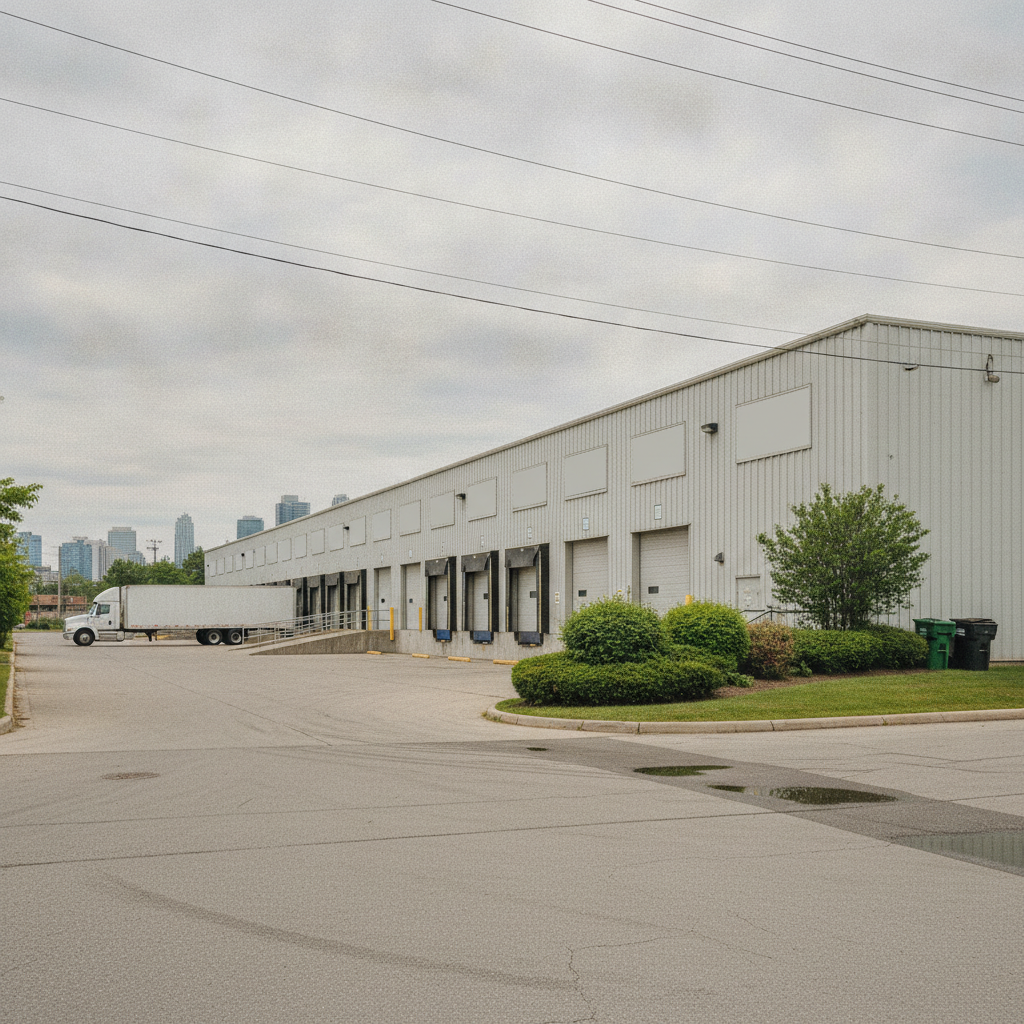
Take a light-industrial condo in the GTA as an example: a 5,000–10,000 sq. ft. bay with dock access can support stable occupiers. In contrast, a main-street retail unit may trade stability for upside if the tenant mix and streetscape are improving.

Local Market Dynamics: Mississauga and the Regional Municipality of Peel
Mississauga and the Regional Municipality of Peel are Ontario logistics and office hubs with diversified tenants and highway access. Industrial demand around key corridors stays resilient, while retail centers linked to daily needs remain steady. Success comes from matching asset to micro-location and tenant profile.
In Mississauga, proximity to 400-series highways and Pearson-adjacent corridors makes industrial a favored category for many buyers. Retail plazas serving dense neighborhoods can hold foot traffic even as consumer patterns shift.
- Industrial clusters: distribution and light manufacturing benefit from efficient loading and transportation access.
- Retail resilience: grocery-anchored and service-driven strips tend to perform more consistently than discretionary-only nodes.
- Office repositioning: design flexibility and wellness features have become differentiators for attracting tenants.
Local considerations for Mississauga
- Traffic and access around the Derry Rd At Dixie Rd corridor can influence loading windows—time site visits to mirror tenant operations.
- Winter conditions can stretch property maintenance cycles; plan snow removal and slip-risk mitigation in lease responsibilities.
- Light-industrial bays near Dixie Rd At Courtneypark Dr often attract logistics tenants—calibrate tenant improvements to support throughput.
Zoning, Due Diligence, and Risk Management
Diligence validates income and use. Review leases, estoppels, operating statements, title, environmental, and municipal zoning. Verify lawful use and any variances. Confirm building systems and life-safety. A structured risk register—with owners, dates, and remedies—keeps closings predictable and supports negotiations.
What most people don’t realize: a great cap rate on paper can unravel if a key use isn’t permitted as-of-right.
- Legal and title: easements, encroachments, or rights-of-way can limit expansion or signage.
- Environmental: Phase I ESA (and Phase II if indicated) to identify historical or current contamination risk.
- Building systems: roof age, HVAC condition, electrical capacity, fire protection, and accessibility.
- Zoning and use: confirm current and intended uses, parking ratios, and any site-plan conditions.
- Lease verification: estoppels, arrears checks, options to renew/expand, and assignment/sublet language.
We assemble findings into a single-page “Go/No-Go” summary so you can decide fast—without skipping critical detail.
Financing and Underwriting Basics
Underwriting focuses on stabilized net income, debt service coverage, and lease strength. Lenders examine rent rolls, tenant covenants, and building condition. You can improve terms by demonstrating durable leases, realistic capex reserves, and conservative vacancy assumptions backed by local comparables.
From our vantage point, clear underwriting reduces surprises during lender diligence.
- Income analysis: audited P&L, trailing-12, rent roll, and reconciliation of recoveries versus actual operating costs.
- Stress testing: model renewal scenarios, free-rent periods, and TI allowances to see coverage under pressure.
- Debt metrics: loan-to-value, debt service coverage, amortization, and interest sensitivity across renewal cycles.
- Covenants: stronger tenant credit often translates into better loan structures or proceeds.
For market context on listings, you can scan regional commercial inventory to see how asset type and location influence presentation and leasing narratives.
Leasing Strategy and Tenant Mix
Smart leasing starts with clear tenant profiles and a building’s competitive edge. Tighten use clauses, align TI with payback, and stage renewals to smooth cash flow. A proactive renewal calendar and service-level culture raise the odds of long-term occupancy.
Leases aren’t just contracts—they’re risk-transfer tools. We focus on clarity around recoveries, maintenance, signage, and improvements.
- Abstract every lease: renewal options, escalation, exclusivity, and assignment rights drive long-term value.
- Model TI payback: tie improvements to rent steps or term length to keep returns balanced.
- Stagger maturities: avoid bunching expiries to reduce rollover shocks.
- Service standards: responsive management raises renewal odds and tenant quality.
Operational details matter. Even specifying HVAC maintenance cadence can prevent disputes and downtime, protecting revenue continuity.
Pricing and Value Drivers in Ontario CRE
Pricing reflects income durability and perceived risk. Asset class, lease term, tenant covenant, location access, and capex profile shape value. Improving NOI through renewals, re-tenanting, and operating efficiency can enhance valuation without relying on market timing.
We avoid “price-chasing” and instead focus on controllable levers that raise net income.
- Tenant quality and WALT: stronger covenants and longer terms support firmer valuations.
- Location and access: proximity to major corridors, transit, and labor attract better demand.
- Operating profile: efficient systems and clarity on recoveries reduce friction and volatility.
- Physical condition: roof, HVAC, and life-safety investments protect cash flow.
- Repositioning potential: light upgrades, signage, or layout tweaks can unlock rents and absorption.
In practice, even a modest improvement to retention or recovery alignment can create a meaningful change in annualized income and buyer appeal.
Tools and Resources
Use focused tools and playbooks to cut analysis time. Our internal guides, market explainers, and investment checklists help you benchmark locations, leases, and risks faster—so you can say “yes” or “no” with confidence and move on the best opportunities.
Leverage our GTA-focused insights and process templates to shorten your learning curve.
- See our perspective on selecting representation in commercial real estate agent Ontario.
- Use this companion commercial property buying guide when building your due diligence plan.
- Cross-check assumptions with the Toronto market 2026 guide for macro context.
- For investing frameworks, review how to buy investment property in the GTA.
- Stay current with Mississauga real estate news to track local demand shifts.
- If you’re exploring pre-construction exposure, see our pre-construction guide.
For broader context on investor education, you can browse a concise property buyer’s overview that outlines category differences in plain language.
Case Studies and Examples
Real outcomes come from disciplined execution. These short examples show how clarity on tenant mix, lease terms, and micro-location can raise income durability, reduce risk, and protect exit value—without needing major capital projects or speculative assumptions.
Example 1: Stabilizing an industrial bay
- Scenario: Client sought a 7,000 sq. ft. light-industrial unit in Mississauga with dock access.
- Action: We screened rent roll, verified use permissions, and negotiated clearer maintenance language.
- Result: Improved lease clarity and minor layout tweaks supported an efficient move-in and durable occupancy.
Example 2: Re-tenanting a main-street retail
- Scenario: Older retail unit with expiring lease and limited street presence.
- Action: We targeted daily-needs tenants, adjusted signage placement, and staged TI to align with term length.
- Result: Occupancy stabilized with a service-oriented tenant, improving income predictability.
Example 3: Office repositioning with wellness focus
- Scenario: Mid-size office needing competitive differentiation.
- Action: Introduced flexible suites and wellness improvements; updated lease language for clarity on services.
- Result: Elevated tenant interest and more balanced negotiation dynamics at renewal.
Book a discovery conversation with Malika Homes to align asset type, micro-location, and lease strategy before you tour properties. A clear thesis saves time—and protects outcomes.
Risk, Mistakes, and Best Practices
Avoid skipping zoning verification, underestimating capital items, or bunching lease expiries. Standardize checklists, stage renewals, and make recoveries transparent. Your future self—and lender—will thank you. Strong processes consistently outperform one-off heroics.
- Don’t skip use confirmation: permitted use and parking ratios can make or break a deal.
- Model capital realistically: roofs, HVAC, and life-safety have clear life cycles—plan them in writing.
- Spread expiries: avoid clustering rollover risk; it compounds operational stress.
- Document service levels: define response times to protect tenant satisfaction and renewal odds.
We’ve found that a one-page risk register—owner, status, deadline, mitigation—keeps teams honest and closings on schedule.
Insurance and Tenant Rights Basics
Clear leases spell out who carries what coverage and how claims impact operations. Align insurance types, indemnities, and maintenance duties with your asset’s risk profile. Share responsibilities predictably to reduce disputes and protect net income.
Coverage clarity helps operators act decisively during incidents and keeps relationships constructive. For a quick primer on how coverage intersects with tenant obligations, skim this practical take on tenant rights and insurance.
How Malika Homes Helps
We help you define a thesis, screen faster, and negotiate smarter. Data, Certified Negotiation Expert tactics, and a vetted partner network streamline due diligence. You get curated on/off-market options, clear risk summaries, and hands-on support from offer to handover.
- Data-driven screening: rent rolls, WALT, comps, and local signals distilled into yes/no decisions.
- Negotiation leverage: clarity on must-haves vs. trade-offs before paper goes out.
- Concierge execution: inspectors, lawyers, mortgage brokers, and contractors coordinated for you.
- Education-first: guides and playbooks so you move confidently, not blindly.
Frequently Asked Questions
These quick answers address common Ontario commercial real estate questions—from asset selection to due diligence timelines—so you can move forward confidently and avoid preventable missteps.
What types of commercial properties perform most reliably in Ontario?
Industrial and daily-needs retail often show durable demand in Ontario’s major hubs. Performance still depends on tenant quality, lease terms, and micro-location access. We match property type to your strategy, then validate income with leases, recoveries, and building condition.
How long does commercial real estate due diligence usually take?
Timelines vary by asset and complexity, but many investors plan a few weeks for document review and site inspections, plus contingency for environmental or legal follow-ups. We map milestones and owners early so issues surface before conditions are removed.
What’s the difference between gross and net leases?
In a gross lease, the landlord covers most operating costs. In a net or triple-net lease, tenants pay base rent plus some or all expenses like taxes, maintenance, and insurance. Understanding recoveries is critical to forecasting net operating income.
Do I need to verify zoning if the current tenant is operating?
Yes. Confirm that your intended use is permitted and that any existing use is lawful and transferable. Zoning, variances, and site-plan conditions can materially affect operations, signage, and parking. We validate these items during diligence to prevent unpleasant surprises.
Conclusion and Next Steps
Great commercial outcomes in Ontario come from clarity and cadence: a written thesis, disciplined screening, structured diligence, and proactive leasing. Match asset type to tenant demand, then manage risk in writing. Do this repeatedly and you won’t need luck—you’ll rely on process.
- Key takeaways: pick asset types that fit your strategy; verify use and income; stage renewals; plan capital.
- Immediate action: write your thesis on one page, then book a call to pressure-test it before touring.
Ready to explore commercial space in Ontario with a clear plan? Schedule a discovery session with Malika Homes—right here in Mississauga—so we can map opportunities to your goals and get you moving with confidence.
Tags
Have questions about Ontario real estate?
Book an appointment with Malika Mehrotra to discuss your buying or selling goals.
Book Appointment