How to Check Whether a Home Suits Vastu Principles
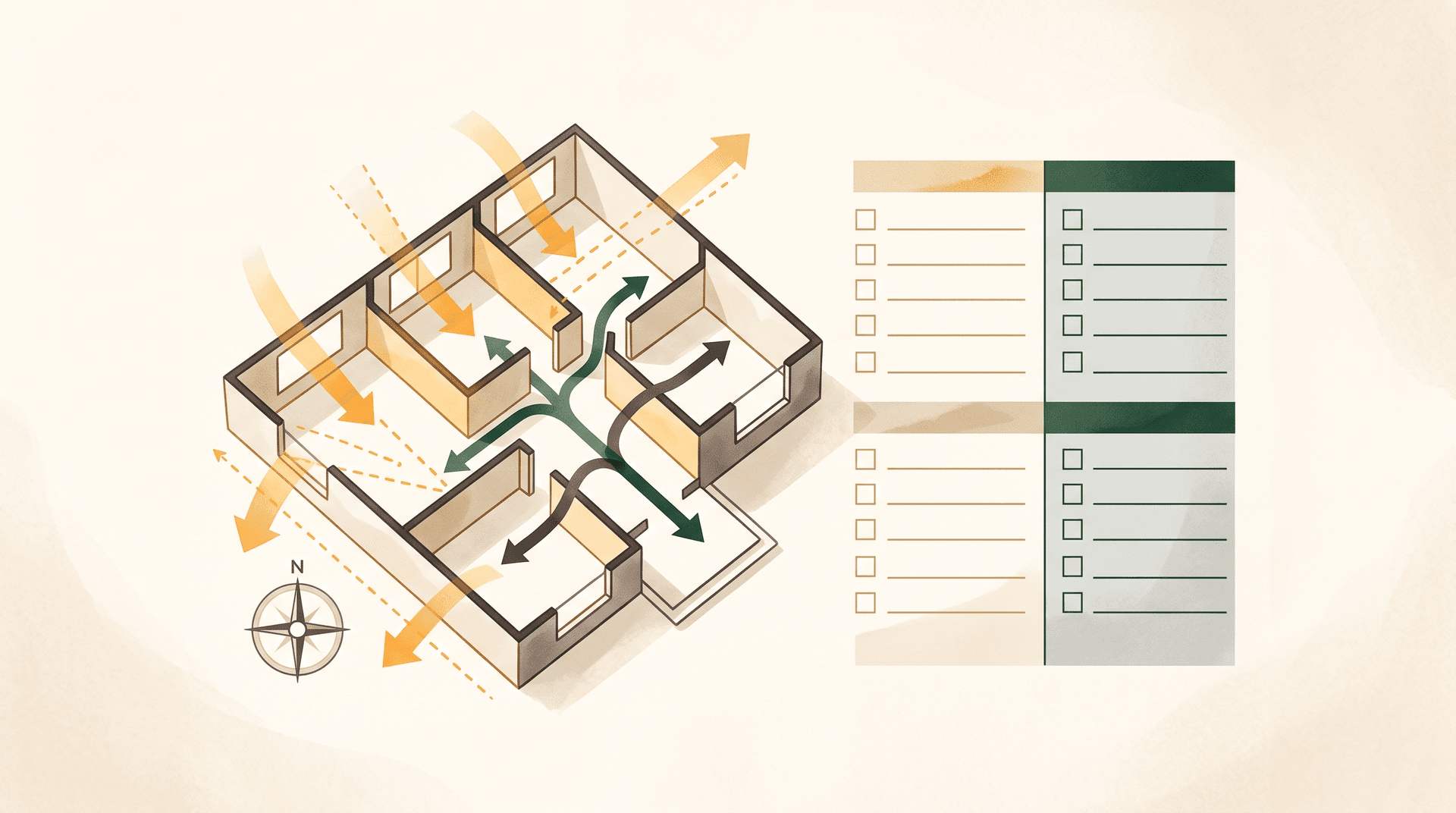
Vastu-conscious home evaluation guide
How to Check Whether a Home Suits Vastu Principles
Short answer: write down the Vastu principles that matter to your household, obtain a reliable floor plan and orientation, and assess the entrance, room relationships, light, circulation and adaptability against that priority list. Then run a separate inspection, legal, financing and property review. A home can fit important Vastu preferences without matching every rule, and no Vastu assessment guarantees condition, safety, value or future outcomes.
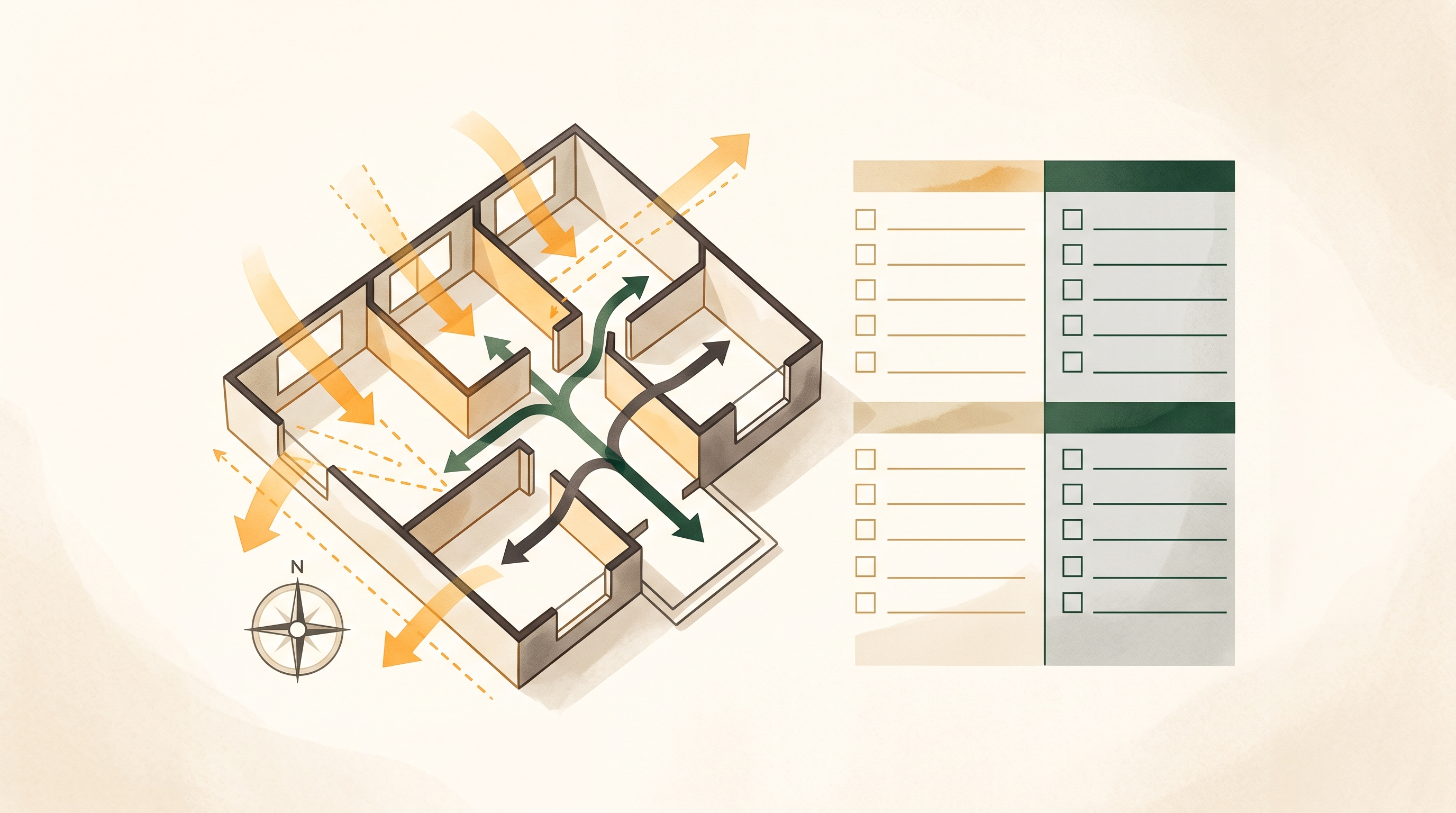
Define what Vastu means for your household
Do not start with a social-media list of “perfect” homes. Begin with the tradition, practitioner or family practice you actually follow. The Indira Gandhi National Centre for the Arts describes Vastu Shastra within traditional Indian knowledge and lists direction, residential design, site, environment and textual traditions among its topics. That breadth is one reason modern checklists can disagree.
Ask each decision-maker to sort preferences into three groups:
- Essential: a feature you would not knowingly compromise.
- Preferred: important, but balanced against location, condition and daily function.
- Adaptable: something furniture, room use or a minor lawful alteration could address.
Record the source or practitioner behind each item. If two rules conflict, decide whose interpretation governs before touring properties. This avoids rejecting a suitable home because a new online rule appeared after the visit.
| Question | Evidence | Decision |
|---|---|---|
| Which Vastu tradition or interpretation are we following? | Named text, practitioner or family practice | One consistent framework |
| Which features are non-negotiable? | Short written priority list | Pass or stop before offer |
| Which features can change? | Layout, ownership, permit and cost review | Accept, investigate or reject |
| Which claims are outcome promises? | Wording that guarantees wealth, health or success | Exclude from the decision model |
Verify direction rather than trusting a listing sketch
Direction-sensitive evaluation needs a reliable reference. Listing plans may be simplified, mirrored, not to scale or missing true north. A phone compass can be affected by metal, electronics and indoor conditions. Where orientation is important, cross-check a survey, site plan, municipal information or measurement by an appropriately qualified person.
Define what you mean by “entrance direction.” Some people measure the direction faced while leaving; others describe the side of the building or the sector containing the door. Record the method so every home is compared consistently.
For condominiums, separate the suite entrance, building entrance, balcony exposure and unit orientation. Also consider shared corridors, elevators, structural walls and condominium rules, because changes that seem simple in a detached house may be impossible in a unit.
Create an annotated plan showing north, the main entrance, windows, plumbing zones, stairs, structural walls and fixed services. Mark uncertain features as “verify,” not as a favourable or unfavourable conclusion.
Read room relationships and everyday function together
Review the home as a set of relationships rather than isolated compass labels. Note where people arrive, cook, sleep, work, gather and store belongings. Observe daylight, privacy, noise, cross-traffic and the path between frequently used spaces.
A practical walkthrough can cover:
- The main approach, entrance, threshold and immediate view.
- The central circulation area and whether it is open, obstructed or heavily serviced.
- Kitchen location, ventilation, work triangle and connection to dining.
- Primary sleeping spaces, privacy, noise and furniture orientation options.
- Bathrooms, plumbing stacks and their relationship to adjacent rooms.
- Stairs, level changes, basement access and vertical circulation.
- Windows, daylight, shading and realistic fresh-air paths.
- Home office, worship, meditation or multigenerational needs.
- Outdoor space, drainage, neighbouring massing and future development.
Comfort and function can align with a household's Vastu priorities, but they are not proof of a spiritual or material result. Photograph and measure only with permission, and avoid making conclusions from staged furniture that will be removed.
Separate easy adaptations from structural changes
A home that misses a preferred furniture orientation may still fit better than one requiring plumbing relocation or structural work. Classify every proposed adaptation before treating it as feasible.
- Movable: furniture, storage, lighting and room use that can change without construction.
- Minor finish: paint or decor, subject to lease or condominium rules.
- Building work: doors, partitions, electrical, plumbing, ventilation or fire separations that may need design and permits.
- Fundamental: site orientation, structural core, common elements or major service locations that may be impractical to change.
Get written cost, approval and feasibility advice before pricing an alteration into the purchase. A Vastu practitioner should not be treated as an engineer, architect, electrician, building official or condominium lawyer unless separately qualified for that work.
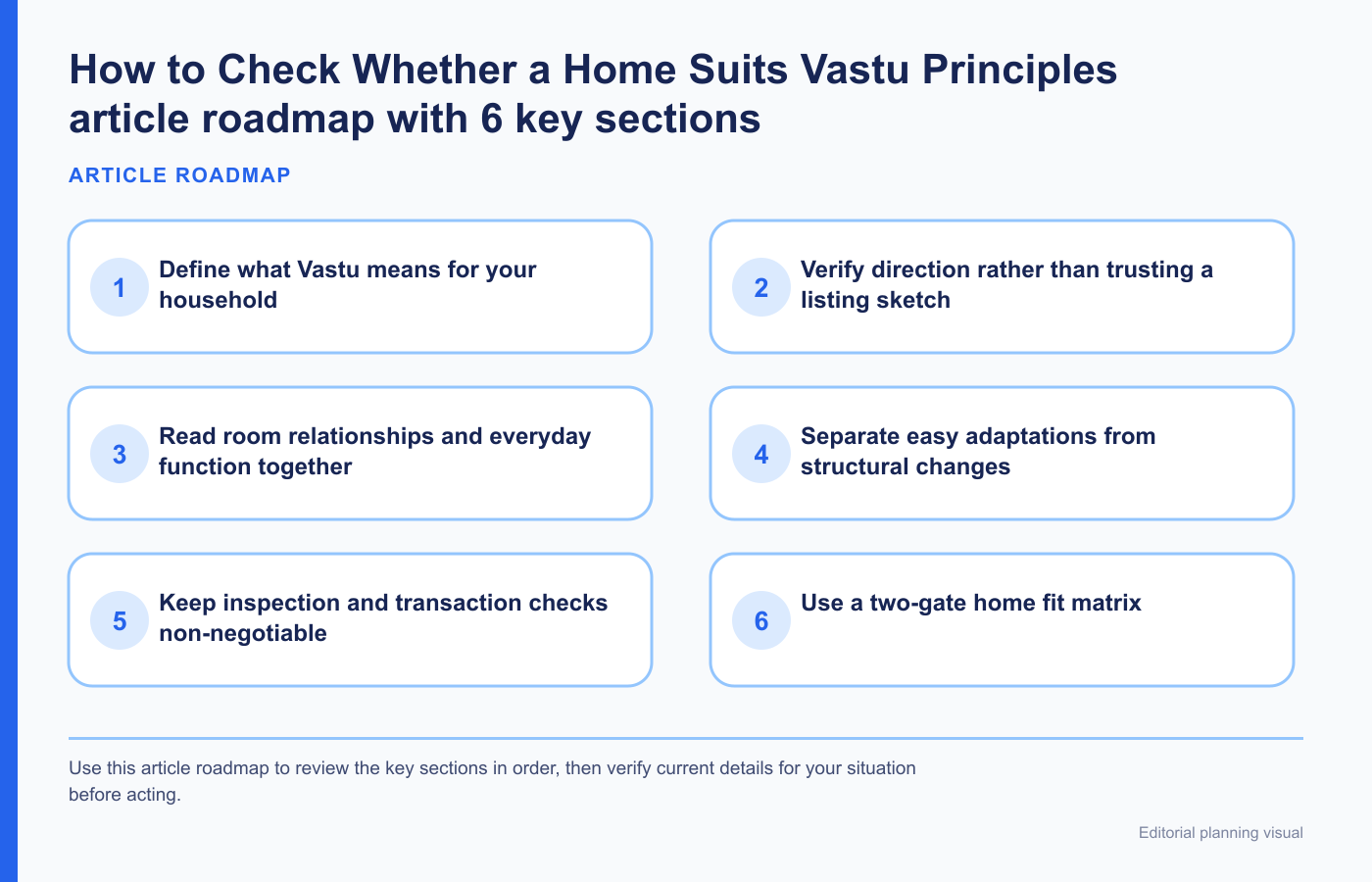
Keep inspection and transaction checks non-negotiable
Vastu fit does not reveal water entry, wiring, structure, roof condition, HVAC performance, title issues, financing or permit history. RECO's buyer checklist advises buyers to understand agreements, budget for transaction costs, investigate systems and permits, and consider conditions such as financing and inspection.
RECO's guidance on home inspections explains that inspectors can examine major systems and that seller or agent knowledge may not reveal underlying problems. An inspection also has limits, so review the scope and bring specialists where conditions require them.
CMHC's homebuying resources treat financing, appraisal, inspection, legal steps and maintenance as distinct decisions. Keep those workstreams visible even when a layout feels culturally right.
For a condominium or new home, add status-certificate or disclosure review, common-element restrictions, builder and warranty checks, pre-delivery inspection and independent legal advice as applicable. Do not waive a protection because another buyer may like the property.
Use a two-gate home fit matrix
Gate one is Vastu preference. Gate two is property and transaction acceptability. A home advances only when both are understood.
- Score each essential Vastu priority as confirmed, uncertain or not met.
- List the evidence and who must resolve every uncertainty.
- Classify adaptations as movable, minor, building work or fundamental.
- Record estimated cost only after qualified written input.
- Run inspection, legal, financing, appraisal and document reviews separately.
- Identify one stop condition for each material risk.
- Compare homes using the same matrix, not a changing list.
- Write the final trade-off rationale before making an offer.
A “mostly suitable” home may be the rational choice when it meets the household's essential priorities and has strong practical fundamentals. A “perfect” compass layout may be a poor purchase if condition, legality, budget or daily function fails.
Common Vastu home evaluation mistakes
- Using an approximate listing arrow as verified north.
- Changing the definition of entrance direction between homes.
- Combining conflicting rules from several practitioners without a priority order.
- Calling a home compliant from photographs without a plan or site review.
- Assuming every missing preference needs expensive remediation.
- Planning structural or service changes without technical and permit advice.
- Letting Vastu fit replace financing, inspection, appraisal or legal review.
- Believing outcome guarantees about wealth, health, relationships or resale.
- Ignoring condominium common elements and alteration restrictions.
- Accepting unverified claims about a consultant's certification or success.
- Rejecting a functional home over a low-priority rule added late.
- Waiving offer protections because a layout feels rare.
Frequently asked questions
Can a home be partly suitable for Vastu?
Yes. Suitability is often a matter of priorities and interpretation rather than a universal pass mark. Decide which features are essential, preferred or adaptable and document the trade-offs.
Can I confirm Vastu suitability from an online listing?
Usually not. Photos and marketing plans may omit direction, measurements, structure and fixed services. Use them for screening, then verify orientation and layout.
Does Vastu suitability replace a home inspection?
No. A Vastu review and a technical inspection answer different questions. Keep inspection, legal, financing, appraisal and document work separate.
Does Malika Homes provide a certified Vastu assessment?
This guide does not verify the current service, consultant, qualification or method. Ask for written scope, credentials, fee, limitations and deliverable before booking.
Request a Vastu-aware property review
Use Malika Homes' buy-and-sell page or visit the main website to request current service details. Bring your written Vastu priorities and a reliable plan. Ask who performs the review, what method is used, what the deliverable includes and what remains outside scope. Keep independent inspection, legal, financing and technical conditions in the buying plan.
Tags
Have questions about Ontario real estate?
Book an appointment with Malika Mehrotra to discuss your buying or selling goals.
Book Appointment